Landscape Design in Dana Point
Plants chosen for an inland garden fail on the coast. The salt air burns their leaves. The marine layer keeps soil wetter than they expect. Wind off the Pacific strips moisture before roots have time to establish. Most garden work in this part of Orange County ignores all of that. Plants get selected from a general catalog. They look fine the first spring. By year two they are struggling. By year three they are gone. We design differently. We are a landscape design firm serving Dana Point and South Orange County. Every garden we design is built around the specific conditions of the coast — the salt exposure, the marine layer, the seasonal winds, the bluff terrain, and the water restrictions that apply to properties here. Plants we specify belong in this environment. They do not just survive. They establish and grow without constant intervention.

What Our Garden Design Service Covers
Ocean View Framing Through Planting
Many properties on the bluffs above Dana Point Harbor, along the streets above Monarch Beach, and in hillside neighborhoods throughout the city have ocean views that define the property's character and value. Plant selection and placement can preserve those views, frame them, or — with the wrong choices — gradually eliminate them as plants mature. We design with view corridors mapped from the outset. Every tree and large shrub is placed with its mature canopy height and spread accounted for. Ground-level planting, mid-level screening, and upper canopy decisions are made as a coordinated system. The garden ten years from now looks better and shows more of the ocean — not less.
Slope and Erosion Control Planting
Bluff properties and hillside lots throughout this city carry erosion risk that flat inland lots do not face. Coastal winter rain events, combined with slopes that often exceed 2:1 grade ratios, move soil quickly when plant cover is thin or poorly rooted. We design slope planting programs that establish fast, root deeply, and hold soil across full seasonal cycles. Deep-rooted natives like Salvia clevelandii, Baccharis pilularis, and Artemisia californica bind coastal slope soils better than any engineered erosion control mat and look like they belong in the landscape — because they do. For steeper slopes on lots above Strands Beach and along the bluff-adjacent streets, we specify deep-rooted groundcovers and low shrubs in combination with strategic rock placement that slows water flow and gives roots time to establish through the first rainy season.
Water-Wise Garden Design
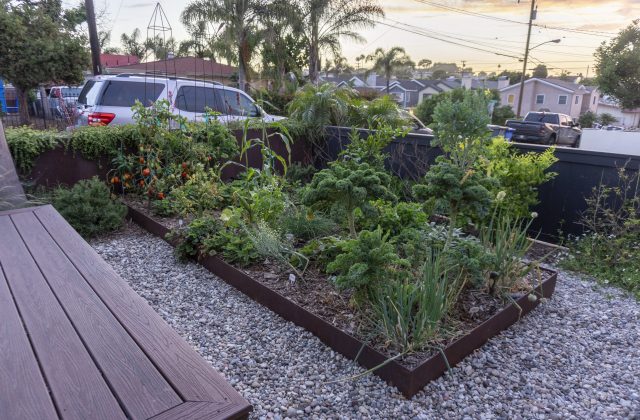
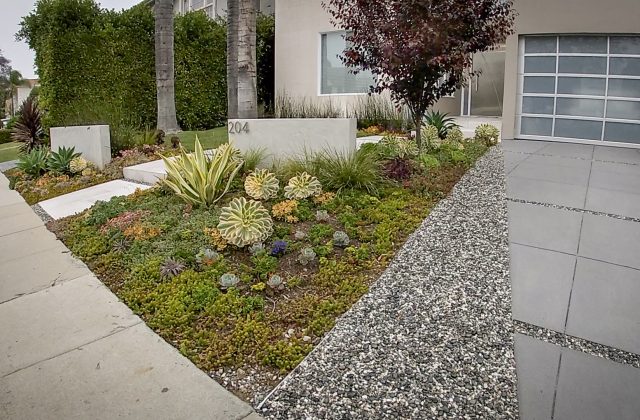
The South Coast Water District serves Dana Point. Water-efficient planting is not optional here — it is required under current state and district ordinances for new landscape installations. We design gardens that meet and exceed those requirements without looking like water rationing was the primary design goal. California natives and Mediterranean species in well-designed combinations create gardens that are full, layered, seasonal, and beautiful — while using a fraction of the water a conventional lawn-based landscape demands. For properties replacing lawn with climate-appropriate planting, we design replacement schemes that qualify for South Coast Water District turf replacement rebates. We identify and incorporate those programs into project planning.
Defensible Space Planting
Properties near open space here — particularly lots adjacent to the coastal bluffs, the Headlands area, and canyon-adjacent neighborhoods — fall within fire hazard severity zones that carry specific planting requirements. CAL FIRE defensible space guidelines define what can and cannot be planted within 100 feet of a structure in these zones. Zone 1, within 30 feet of the structure, requires the most careful selection — low-fuel-volume plants, adequate spacing, and avoidance of species with high volatile oil content. We design defensible space planting that meets CAL FIRE requirements and still creates a finished, designed appearance. Many homeowners assume fire-safe means bare or sparse. It does not. It means thoughtful — which is exactly how we design.
Brentwood Streets and Character We Know
We Know Coastal Plant Performance
We know which species establish on Dana Point's bluffs and which fail in the first year despite looking healthy at the nursery. We know the wind exposure differences between a lot facing southwest above the harbor and one tucked into a canyon above Doheny State Beach. We know what the marine layer does to soil moisture and which root systems handle that environment without developing fungal problems. That knowledge comes from designing and observing coastal gardens in this specific area over time. It does not come from general horticulture training.
We Design for Maturity
We design gardens for what they will look like in five and ten years — not what they look like on installation day. Plant spacing, layering decisions, and species selection all reflect mature sizes and growth rates under coastal conditions. A garden designed for maturity requires less intervention over time, not more.
HOA Submittal Experience
Many communities here require design review approval before landscape installation begins. We prepare HOA submittal drawings and plant schedules in the format each association requires. We have received landscape design approval in coastal communities throughout South Orange County and know what review committees look for.
Water District Compliance Built In
Every planting plan we produce is designed to comply with South Coast Water District landscape ordinance requirements. We calculate the Water Budget and MAWA for qualifying projects and document compliance as part of our deliverables. You do not have to track water use requirements separately.
Honest Maintenance Assessment
We tell you honestly what a garden requires to maintain before you commit to the design. Some plants need annual pruning. Others need seasonal deadheading. The right design for your property balances the garden you want with the maintenance you are willing to do or pay for.