Landscape Construction in Newport Beach, CA
Newport Beach properties don’t look the way they do by accident. The flat parcels of Corona del Mar carry one set of conditions. The bluff estates along Ocean Boulevard carry another. Bay-fronting lots in Balboa Island carry a third. Salt air off the Pacific. Clay soil in some pockets, sandy loam in others. HOA design guidelines in Pelican Hill, Harbor View Hills, and Bonita Canyon. A Coastal Commission permit process that adds a layer most inland contractors have never dealt with.
Tom Stout holds a California Landscape Contractor (C-27), General Contractor (B), and Pool Contractor license. Katherine Karges leads planting and garden design. The same team that draws your plan builds it. No handoffs. No subcontractors brought in after design is done.
.
Landscape Construction Services
Planting Design and Installation
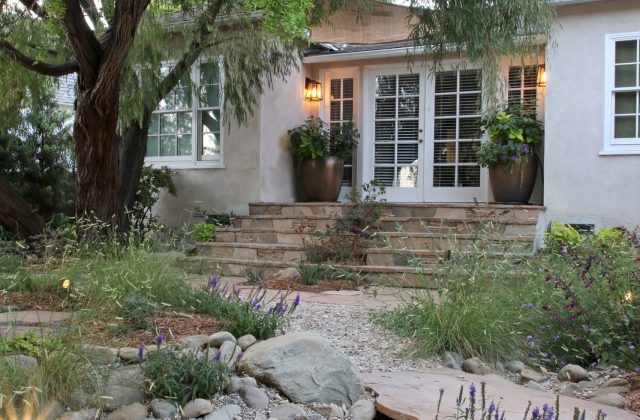
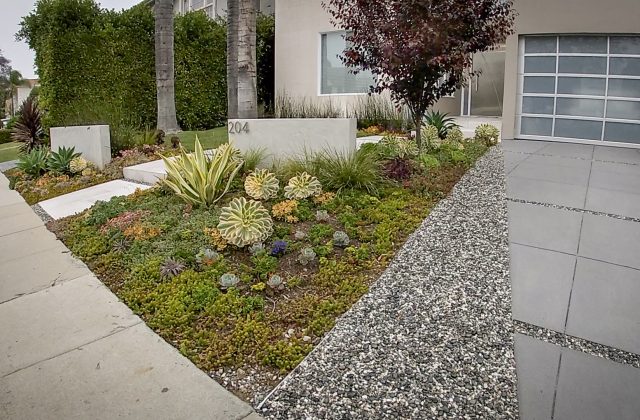
A planting plan for this city is not a generic Southern California plan. Properties within the zone generally west of Pacific Coast Highway in Corona del Mar and Newport Coast — face wind-driven salt spray year-round. Species that perform well in Irvine often struggle within two blocks of the beach. Reliable performers here: New Zealand Flax, Dymondia groundcover, Agave, Australian Willow, Feather Grass, Toyon, Coffeeberry, and Lemonade Berry. All selections are verified against your lot’s actual microclimate before they appear on a plan
Hardscape and Outdoor Living Construction
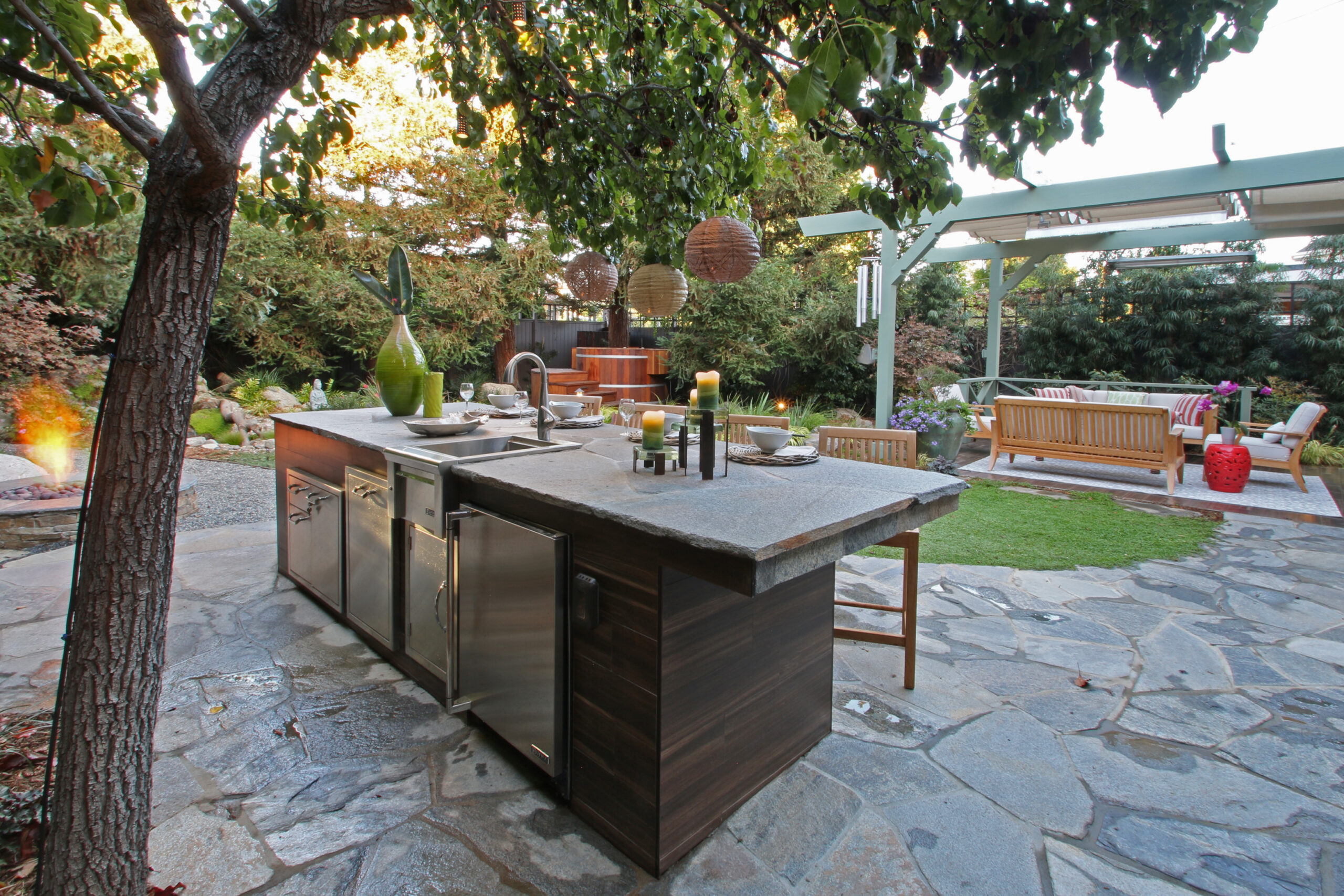
Patios, garden walls, pergolas, outdoor dining terraces, and built-in seating areas all designed as part of the landscape composition, not added around it afterward. In this zone, hardscape materials must account for year-round salt air exposure. Sealed concrete, natural travertine, limestone, and powder-coated hardware with marine-grade coatings all hold up. Unsealed concrete, standard galvanized hardware, and untreated wood do not.
Irrigation Systems
A properly designed drip and micro-spray system zoned by plant type and sun exposure — is the most cost-effective long-term investment you can make. MWD SoCalWater$mart rebate submissions are included in every qualifying project scope. Smart controller installation, soil moisture sensor integration, and MWELO-compliant documentation are all standard.
Retaining Walls and Grading
Newport Beach carries real grade variation — from the bluff properties along Carnation Avenue and Heliotrope Avenue in Corona del Mar to the canyon-adjacent lots in Newport Coast. Retaining walls over 30 inches require a building permit. Walls over 4 feet require structural engineering.
Does landscape construction in Newport Beach require a City permit?
Yes, for most scopes. Retaining walls over 30 inches, irrigation connections to the municipal water supply, outdoor kitchen structures attached to the home, and any grading that moves more than 50 cubic yards all require permits from the City of Newport Beach Community Development Department. Coastal Development Permits are required for work in the zone. We file all applications simultaneously and manage plan check through final inspection.
Newport Beach Neighborhoods — What Changes by Area
Corona del Mar
Properties along Bayside Drive, Ocean Boulevard, and the streets running down toward Little Corona Beach sit in direct marine exposure. Planting must be genuinely salt-tolerant. Hardscape materials must hold against marine humidity year-round. Lots here often run narrow with rear canyon views — the landscape design has to respond to those dimensions rather than ignore them.
Balboa Island and Balboa Peninsula
Small lots, close neighbors, and bay or channel frontage define most Balboa Island projects. Work within the coastal zone here requires a Coastal Development Permit. HOA or community board review applies to many properties. Design decisions — material palette, wall heights, planting density — are made with those constraints built in from the first meeting.
Newport Coast and Pelican Hill
Larger estate lots, HOA architectural guidelines enforced by the Pelican Hill Association and Newport Coast Community Association, and proximity to open space and fire zone designations. Chapter 7A non-combustible material requirements apply to deck surfaces and adjacent structures on fire zone-adjacent properties. We specify compliant materials in the design phase — never discovered at permit review
Irvine Terrace
One of Newport Beach's most architecturally considered neighborhoods — mid-century modern homes, bay views, mature tree canopies, and a design standard that rewards restraint. Planting plans here favor structure and composition over volume.
Real Projects
Corona del Mar Rear Garden — Terraced Hardscape and Coastal Planting
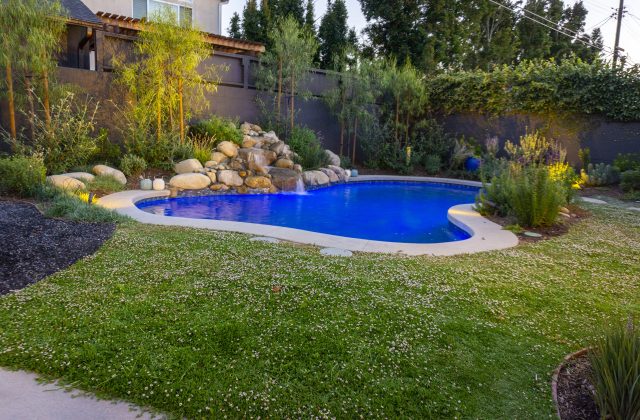
A bluff property off Heliotrope Avenue had 18 inches of grade drop across the rear garden. We designed a two-level terraced patio with natural limestone on the upper dining terrace and decomposed granite on the lower garden path, connected by a low limestone retaining wall. Planting used Agave, New Zealand Flax, and Toyon as the primary structure, with Dymondia groundcover throughout. MWELO documentation filed alongside the building permit. One submission, one review.
Newport Coast — Fire Zone Garden and HOA Review
A property in the Newport Coast gated community required Chapter 7A non-combustible materials on deck surfaces and defensible space planting in the canyon-facing rear section. We designed the hardscape with sealed concrete meeting Chapter 7A requirements, installed a Zone Zero and Zone One defensible space planting plan using California natives, and prepared the HOA submission package for the Newport Coast Community Association. Permits and HOA approval obtained concurrently.
Balboa Island — Coastal Planting Renovation
An existing planting scheme had failed — the original contractor had used species poorly suited to direct bay exposure. We removed the failed planting, amended the soil to address compaction from the previous installation, and replanted with a salt-tolerant palette: New Zealand Flax, Dymondia, Australian Willow, and Coffeeberry. A new MWELO-compliant drip irrigation system was installed and documented. The City of Newport Beach Coastal Development Permit was filed and approved before any work began.
How long does landscape construction take in Newport Beach?
Timeline depends on scope and permit type. A planting and irrigation project without structural work runs two to four weeks from permit approval. A full outdoor environment with hardscape, planting, irrigation, and lighting runs six to twelve weeks. Projects requiring a Coastal Development Permit add three to six weeks for that review. We provide a project-specific schedule at contract signing — not a generic estimate.
Why Choose Stout Design Build for Newport Beach Landscape Construction
Licenses that cover the full scope
Tom holds a Landscape Contractor (C-27), General Contractor (B), and Pool Contractor license from CSLB. One contractor for the complete project
Permit experience at the coast.
Coastal Development Permit applications, MWELO compliance, and marine-grade material specifications are standard on our projects — not things we learn on the job.
Design and construction under one roof.
The team that draws your plan builds it. No translation between a design firm and a separate contractor. What you approve is what gets built.
Services we offers
Frequently Asked Questions
Do I need a Coastal Development Permit for landscape work in Newport Beach??
What plants hold up in Newport Beach's coastal zone?
Let’s Talk Today!
Address:
Heil Ave, Huntington Beach, CA 92649, USA
Begin Your Green Journey
We’d love to hear from you. Fill in your details and let’s start planning your perfect outdoor space.